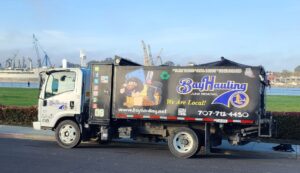
To handle yard waste, separate branches, brush, leaves, and other plant debris from soil, rocks, construction wood, and chemicals. Then check whether your local collection program accepts the material and quantity or arrange a hauling appointment. Branch size, access, and the contents of the pile all affect the right option.
A little pruning may fit your usual organics service. A large brush pile or a mixed garden clearout often needs more planning than filling the next available bin.
Identify what the cleanup produced
Take a look at the entire project before combining material. Keep clean plant debris apart from broken pots, wire, plastic edging, landscape fabric, lumber, and discarded equipment.
Soil and rocks add weight quickly and should be described separately when requesting a quote. Stumps and large logs also need specific acceptance confirmation; they are not interchangeable with light branches.
Flag thorny plants, suspected poison oak, pest-infested material, or unusual plant waste. Ask your receiving program or removal provider how it should be handled before collecting it into bags.
Check the rules for your service address
Accepted materials and preparation rules differ across collection programs. Confirm branch dimensions, container weight limits, extra material arrangements, and whether bags or bundles are allowed.
For a local example, Recology American Canyon lists plant debris such as leaves, weeds, and branches among compost materials, while its sorting guidance identifies materials that do not belong in that stream. Use the instructions serving your address instead of applying them throughout the Bay Area.
If the pile exceeds your normal service, ask about a scheduled collection or approved drop-off. Do not assume extra material beside a cart will be collected automatically.
Choose a practical removal option
Option | When it may fit | What to confirm |
|---|
Regular organics collection | A manageable amount of accepted plant debris | Size, weight, bin, and preparation rules |
Scheduled local collection | Extra material accepted by your waste provider | Booking, limits, eligible items, and placement |
Self-haul to a receiving site | You can load and transport the material safely | Acceptance, fees, and load requirements |
Junk removal or debris hauling | A larger pile or a project needing lifting and loading | Exact materials, access, labor, and disposal route |
Compare the entire task, including carrying the material to the collection point. A program that requires curbside staging may not suit a heavy pile at the back of a property.
Keep fencing and treated wood separate
Old fence boards, decking, and garden structures belong on a separate material list. Some wood has been treated with preservatives and requires an appropriate disposal route.
DTSC provides guidance and facility information for treated wood waste. Confirm acceptance with the receiving facility or qualified provider rather than mixing this material into green waste.
Do not burn treated wood or turn it into garden mulch. If you cannot identify a board’s treatment, tell the provider what you know and ask how it should be classified. A weathered appearance does not settle the question.
Prepare the pile without creating extra work
Use an accessible staging area that does not block a doorway, sidewalk, drain, or shared driveway. Keep loose litter out of the plant debris and protect material from blowing into neighboring properties.
Follow the provider’s instructions on bundling and bagging. Do not create bundles so heavy that they become difficult to handle. Ask before cutting oversized branches; the service may have a preferred method or may require a different provider.
Keep fuel, pesticides, fertilizer products, and other garden chemicals in a separate disposal plan. Leave unstable limbs, overhead hazards, and trees needing removal to appropriately qualified tree professionals. A debris pickup should not be assumed to include tree work.
Send the right details for a hauling quote
Photograph the pile from more than one angle and include something that helps show its scale. Describe branches, logs, soil, lumber, and other materials separately.
Explain gates, stairs, slopes, and the distance from the pile to possible truck parking. If you want material collected from several parts of the yard, include those areas in the request.
Bay Hauling offers yard debris removal. Ask the team to confirm your materials and whether the quote includes collection from their current location.
Before work begins, identify plants and landscaping that must remain. After loading, walk the agreed area to check for overlooked debris and clarify any material that needs another route.