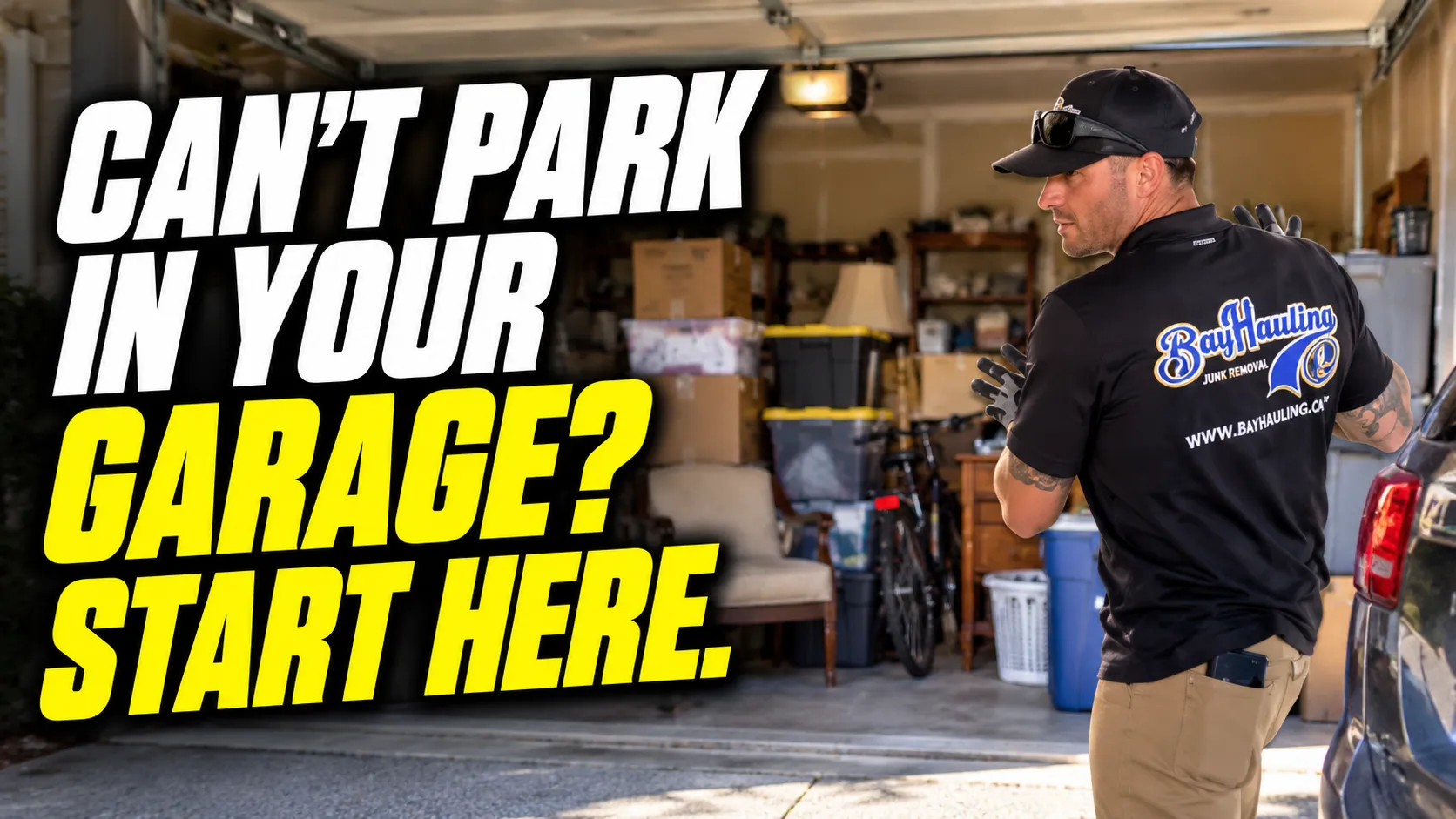
A practical garage cleanout checklist starts with a clear goal, then moves through sorting, removal, and storage. Decide what the garage needs to do, work through one section at a time, and arrange collection before unwanted items become a second pile in the driveway. Buy storage equipment after you know what you are keeping.
Whether you want to park a car again or make room for a workbench, the cleanout should support a specific use. “Get organized” is hard to finish; “clear this parking space and keep this walkway open” is easier to measure.
Set your goal and prepare a work area
Decide which floor space must remain open. Note access to doors, utilities, and equipment that should not be blocked. Keep the garage usable while you work rather than emptying every shelf at once.
Choose a manageable section and a realistic stopping point. A shelf, cabinet, or corner is a better first task than an entire garage if you only have an afternoon. Arrange a covered place for items that need to stay dry and avoid spreading belongings into shared or public areas.
Before moving anything large, look for unstable shelving, leaking containers, or other conditions that need professional attention. Do not pull items from the bottom of an unstable pile.
Sort each section into clear destinations
Use four categories: keep, donate or sell, recycle through an appropriate program, and remove. Give each item a destination before you carry it across the garage.
Check inside boxes instead of assuming the labels are accurate. Separate important records, spare keys, tools, and sentimental belongings before deciding that a container should leave. For shared households, set aside items that need another person’s decision.
Put a collection deadline on the resale pile. If a buyer has not confirmed by that date, choose another suitable route. Otherwise, a cleanout can turn into long-term storage for an online listing.
Give special materials their own plan
Garages often contain leftover products that should not be packed with ordinary household clutter. Keep paints, solvents, pesticides, and other questionable materials separate while you check local disposal guidance.
EPA recommends keeping household hazardous products in original labeled containers, avoiding mixtures, and consulting local collection programs. Do not empty unidentified liquids to make their containers easier to discard.
For Berkeley and Hayward addresses, RE:Source offers item-based searches for nearby reuse and recycling destinations. Check the site’s geographic coverage and confirm the chosen facility’s conditions before transporting a load.
Arrange removal before reorganizing
Make an inventory of the unwanted furniture, shelving, tools, boxes, and appliances. Take photos after sorting so your quote reflects what actually needs to leave. Note whether a refrigerator is connected or a workbench is fixed in place.
Ask about the complete job, including access, any disassembly, and the cleanup included after loading. A garage cleanout is not automatically a pressure-washing, mold-remediation, or repair service.
Bay Hauling’s garage cleanout service can help with the removal stage. Explain whether the garage is already sorted or whether you need to discuss a more involved project.
Use the checklist to finish the job
- Choose the parking, workspace, or storage area you want back.
- Photograph the starting layout for your own reference.
- Sort one manageable section at a time.
- Protect valuables and resolve uncertain ownership.
- Confirm donation recipients and resale pickup deadlines.
- Arrange separate handling for special materials.
- Book removal for the actual remaining load.
- Review the area after collection and complete suitable cleaning.
- Return only the items you have decided to keep.
- Set a short recurring check to prevent new buildup.
Organize around what you use
Keep frequently used items easy to reach and label containers with their actual contents. Group items by activity, such as gardening or camping, rather than mixing unrelated supplies in whatever box is available.
Measure before buying shelving. Follow the manufacturer’s load and installation instructions, and leave access around equipment. A tidy-looking garage is not useful if reaching a bicycle means moving five other things.
Reserve one small area for items awaiting donation or removal, with a date attached. Keeping that area limited makes it easier to notice when the garage is becoming a holding space again.