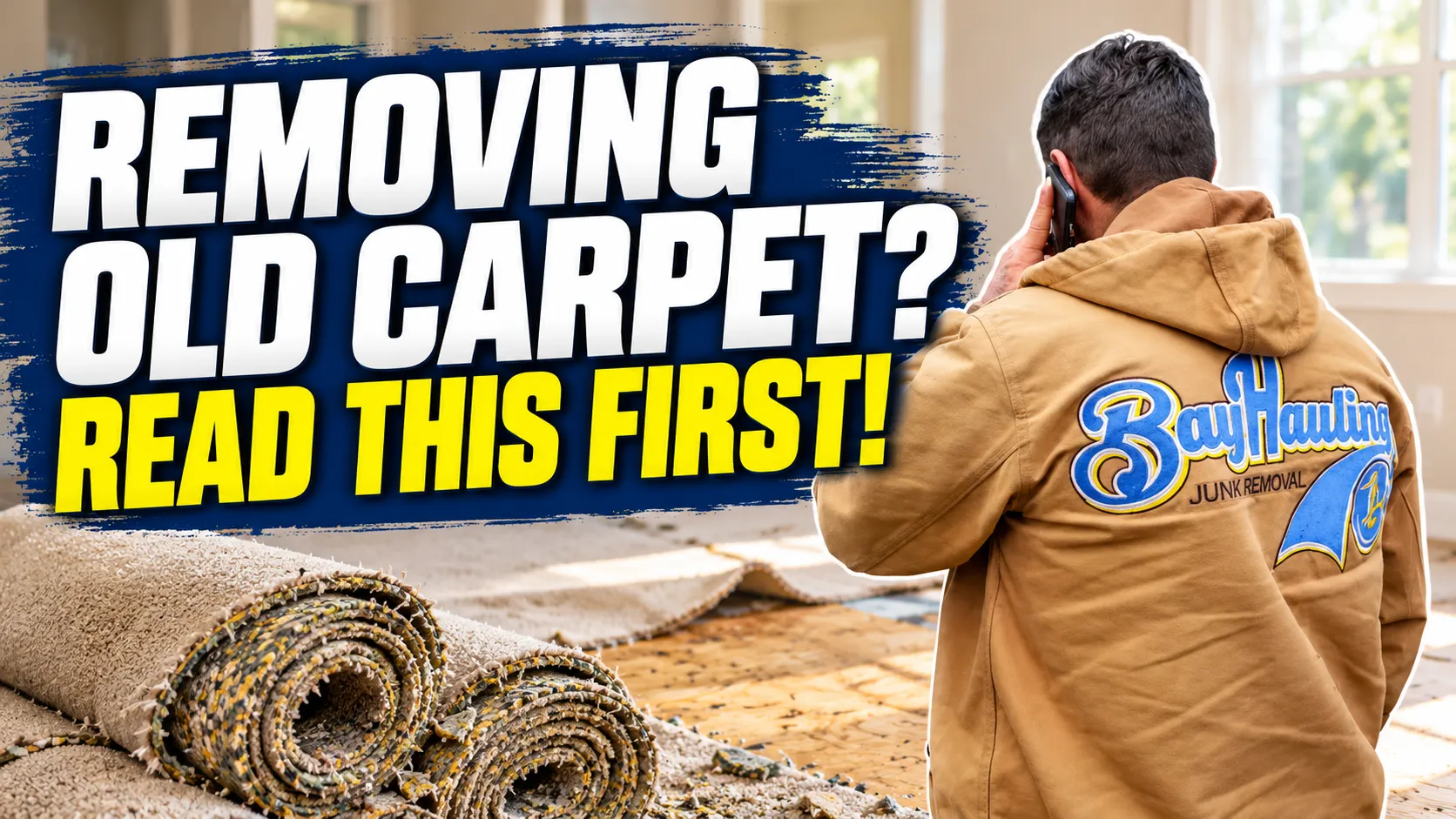
Plan carpet removal and disposal by confirming who will pull up the carpet, remove padding and tack strips, and haul the material away. Check recycling acceptance before work starts so suitable carpet stays dry and separate from debris. Coordinate the pickup with your flooring installer and the condition of the underlying floor.
A flooring quote may include some of these tasks and exclude others. Clarifying the handoff helps prevent a room full of carpet rolls from delaying the next stage.
Define the removal work room by room
List the rooms, closets, landings, and stairs involved. Provide approximate areas and identify furniture that must move before the carpet can be reached.
Tell the provider whether the carpet is still installed, already loose, or rolled up. Mention carpet tiles, glued installations, multiple layers, and wet or damaged sections. Those details can affect labor and the available disposal route.
Ask for clear answers about:
- Moving and replacing furniture.
- Removing carpet and padding.
- Taking up tack strips and remaining fasteners.
- Handling adhesives or underlying flooring.
- Carrying, loading, and hauling the material.
- Basic cleanup versus preparing the subfloor for installation.
Avoid assuming “carpet removal” includes every task needed before new flooring goes down.
Prepare the room and protect belongings
Remove loose items and clear accessible shelves and closets included in the work. Arrange help for heavy furniture rather than dragging it across an uncertain surface.
Identify electronics, fragile items, and cables near the route. If the room contains built-in furniture or a heavy safe, discuss that before the crew arrives.
For a Bay Area apartment or condominium, confirm building rules for work hours, elevator use, and loading. Keep shared hallways clear when planning where rolls will be staged.
Pause if older materials need assessment
Carpet can cover flooring, backing, or adhesive that should not be disturbed without evaluation. Stop if unknown older materials are exposed and the next task would involve scraping, sanding, grinding, or breaking them.
EPA’s asbestos guidance recommends professional evaluation where suspect materials may be disturbed. Appearance alone cannot establish whether an older floor or adhesive contains asbestos.
Discuss water damage, visible mold, or contamination before booking. Ordinary carpet hauling does not automatically include remediation or repairs to the floor below.
Check carpet recycling before the tear out
California has a carpet stewardship program overseen by CalRecycle and operated by Carpet America Recovery Effort. CalRecycle links to a locator for carpet drop-off sites. Confirm the receiving site’s current acceptance, fees, and preparation instructions.
StopWaste’s carpet directory includes Bay Area outlets and preparation guidance. Common requirements include keeping carpet dry, separating it from padding, and excluding debris such as tack strips, nails, and dirt. Follow the particular outlet’s instructions for roll or section size.
Ask the installer or removal company whether a suitable recycling route is available for your material. A recyclable fiber does not guarantee that wet, contaminated, or mixed debris will be accepted.
Keep the material organized for pickup
Choose a staging location that is accessible and protected from rain. Keep the carpet, padding, and sharp fastening material separately identified according to the provider’s instructions.
Do not hide tack strips or loose sharp objects inside ordinary bags. Tell the crew where those materials are and ask how they should be contained. If the provider is doing the tear-out work, agree on its preparation responsibilities instead of duplicating the task yourself.
Avoid leaving rolls where they block doors or walking routes. A carpet pile can occupy more space than expected once padding and multiple rooms are included.
Coordinate removal with installation
Confirm the day and scope of each service. The installer may need to inspect the exposed subfloor before deciding what repairs or preparation are necessary.
Bay Hauling’s carpet removal service describes carpet, padding, and tack-strip removal. Discuss your installation type, access, and material condition so the quote reflects the actual job.
Ask how changes are handled if the crew finds extra layers or unexpected glued sections. Review and approve any additional scope before work continues.
After collection, check the agreed rooms and loading route. Confirm whether remaining fasteners, adhesive, trim, or repairs belong to the removal provider or the flooring installer.