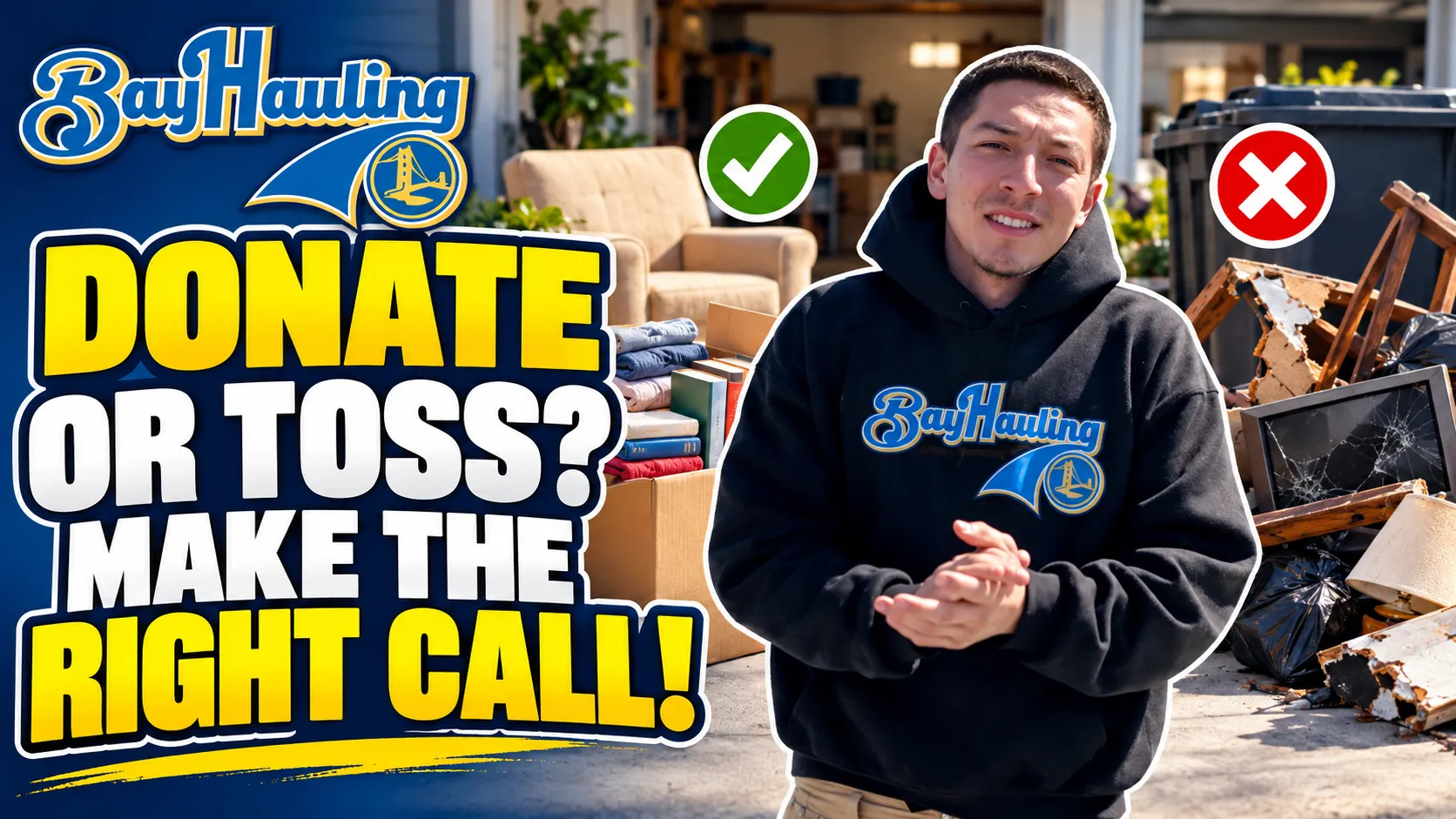
Furniture donation is a good option when an organization wants your item, accepts its condition, and can receive it on your timeline. Junk removal can fit items that are unsuitable for donation or a project that needs lifting and several removal tasks handled together. Check both acceptance and pickup arrangements before committing to either option.
A useful chair and a broken sectional do not need the same plan. Treat each piece separately, even when everything is leaving the same Bay Area home.
Start with an honest condition check
Look at the furniture as someone deciding whether to bring it into their own home. Check stability, upholstery, drawers, hardware, and noticeable odors. Look underneath cushions and inspect accessible surfaces without tipping a heavy piece yourself.
Good donation photos show the whole item and any flaws. Include dimensions and describe wear directly. A small tear that seems unimportant to you may affect whether the organization can use the piece.
Habitat for Humanity East Bay/Silicon Valley ReStores, for example, seek items in excellent working condition and sell donations as received. Their guidance excludes stained or damaged upholstery, and final acceptance remains at staff discretion. Their residential pickup arrangements involve ReSupply; verify the current service and any charges directly.
An online list or encouraging photo response does not guarantee that every item will be accepted when inspected.
Compare the practical differences
Decision | Furniture donation | Junk removal |
|---|
Item condition | Must meet the recipient’s acceptance standards | Describe damage and confirm the item is accepted |
Main goal | Place a usable item with an accepting organization | Arrange removal of agreed items from the property |
Timing | Depends on recipient capacity and pickup or drop-off availability | Depends on crew availability and the quoted scope |
Moving help | Varies by organization and pickup provider | Confirm indoor lifting, stairs, and access in the quote |
Final destination | Accepted into the organization’s reuse process | May involve reuse, recycling, or disposal depending on the item |
The right choice depends on the actual piece and available arrangements. A donation route is not automatically free, and a paid pickup does not automatically mean the item will be donated.
When donation is worth arranging
Donation makes sense when the piece is clean, complete, useful, and specifically wanted. It is especially practical when you can provide clear photos, allow time for a response, and handle an approved drop-off or pickup.
Before reserving a time, ask:
- Do you currently accept this type of furniture?
- Are there size, material, or condition restrictions?
- Is pickup available at my address, and what does it include?
- Will the item need to be downstairs or outside?
- What happens if the driver declines the piece?
Keep the acceptance message and appointment details together. Have an alternative plan if you are working toward a move-out deadline. Do not leave furniture at a donation site outside its approved receiving arrangements.
When junk removal may fit better
A removal appointment can be more practical when you have a damaged couch, several unrelated bulky items, or furniture you cannot safely carry. It can also help when the project requires coordinated indoor lifting rather than a curbside handoff.
Bay Hauling’s furniture removal service covers furniture pickup and heavy lifting. Send photos and explain the route from the room to the truck so the team can confirm the details for your job.
Disclose stains, pests, unusual weight, and access problems before booking. Some conditions can change acceptance or require another professional. Ask what the estimate includes and whether any disassembly will be necessary.
Use both options for a mixed cleanout
A mixed plan often works well. Offer suitable furniture to a confirmed recipient, then arrange removal for the remaining accepted items. Label pieces clearly so a removal crew does not load a dresser reserved for donation.
Schedule donation first when possible, leaving enough time to handle a declined item. If you need one coordinated visit, ask the removal company what reuse options it can actually arrange. Avoid assuming it has a particular charity partnership.
Before either pickup, empty drawers, remove personal belongings, and point out the pieces staying in the home. Keep receipts or acknowledgments provided by the recipient with your project records.