Choose a junk removal company by checking whether it serves your address, accepts your items, provides the lifting you need, and explains its price in writing. Verify relevant insurance and qualifications, review recent feedback, and ask about disposal arrangements. Compare providers using the same item list and access details.
The most useful question is not simply “How much for a truck?” It is what the company will remove, from where, under which conditions, and for what total agreed price.
Start with your own item list
Photograph the unwanted items and note where they are located. Count large pieces separately and identify electronics, appliances, heavy material, and anything needing special handling.
Include stairs, narrow passages, parking restrictions, and furniture requiring disassembly. State whether the items are already outside or need to be carried from a room.
Give each provider the same information. Otherwise, one company may price a curbside load while another includes indoor lifting, making the numbers difficult to compare fairly.
Confirm service area and actual availability
Ask whether the company serves your exact address and can work within your preferred window. A business advertising the Bay Area may have different arrangements for individual cities or outlying locations.
Explain a firm deadline, such as a move-out or contractor arrival, before accepting an appointment. Confirm the arrival window and what happens if the schedule changes.
For a building with a reserved loading dock or elevator, make sure the company’s timing fits those restrictions. Same-day availability should be confirmed for the actual job rather than assumed from a website headline.
Ask for a quote with a clear scope
A useful estimate identifies the accepted items, their location, included labor, and the pricing basis. Ask whether the company charges by volume, item, weight, labor, or a combination.
Confirm these details before work begins:
- Any minimum charge.
- Loading, transport, and disposal charges.
- Stairs, long carries, or disassembly.
- Heavy or restricted-material fees.
- Taxes or other applicable charges.
- The approval process for extra items or changed conditions.
If the estimate is based on photos, ask when the price becomes final. Keep the written confirmation and avoid approving work while important charges remain unclear.
Verify insurance and qualifications for the job
Ask about current insurance appropriate to the work and any documentation your building requires. The business name on the documents should match the provider you are hiring.
For a project involving licensed contracting work, such as certain demolition tasks, use CSLB’s license lookup to check the contractor’s status and relevant classification. A general statement that a business is “licensed” does not identify which license covers the proposed work.
Keep ordinary loading and hauling distinct from utility disconnection, hazardous-material work, and structural demolition. Ask who performs any specialist tasks and whether separate providers or agreements are needed.
Read reviews for relevant patterns
Look at recent feedback about projects similar to yours. Useful details include communication, arrival reliability, price changes, care inside the property, and how problems were resolved.
One short review may tell you little about the work you need. Read several and compare their details with the company’s responses and current service information.
If you have a complex project, ask the company how it would handle the access and scope. Clear answers to your specific questions are more useful than an unsupported claim to be the best provider in every situation.
Ask what happens to the items
Discuss donation and recycling as possibilities tied to actual condition and available receiving outlets. Ask how the company handles items that cannot be reused or recycled.
If you need a particular donation destination, disposal record, or electronics documentation, raise that before booking. Confirm what can actually be provided rather than assuming every pickup includes item-by-item tracking.
EPA recommends certified recyclers for business electronics and provides information on the R2 and e-Stewards programs. Electronics requirements may call for a separate qualified provider, depending on the equipment and data involved.
Compare the complete offer
A practical comparison considers price, lifting, timing, accepted materials, and communication together. The lowest number may exclude work another estimate includes; a higher number should still have a clear explanation.
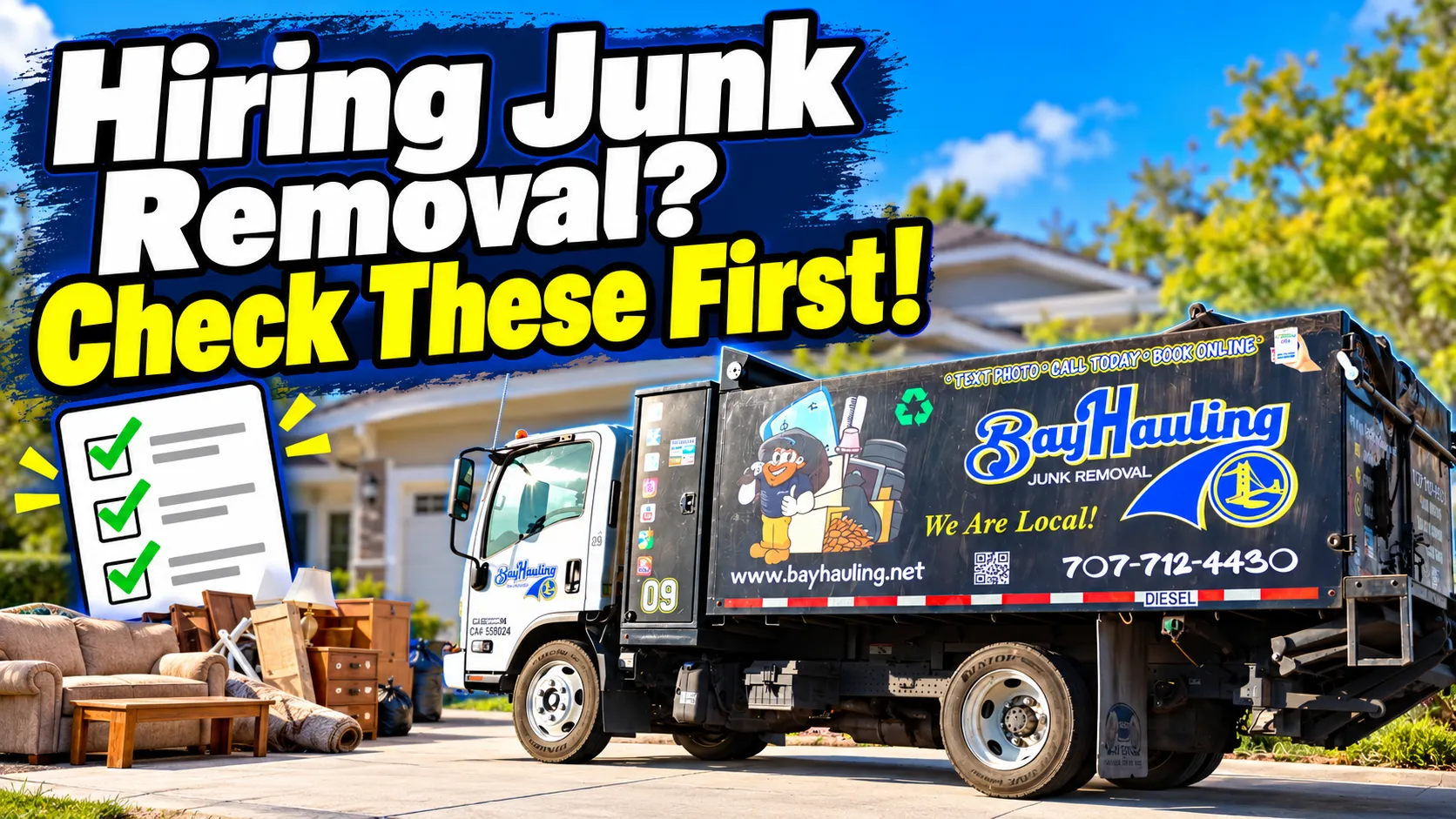
Bay Hauling publishes its removal process and accepted-item guidance. Use those pages to prepare your questions, then confirm the quote for your address and load.
Keep an agreed item list available on collection day. Review changes before loading and complete a walkthrough before closing the job.